

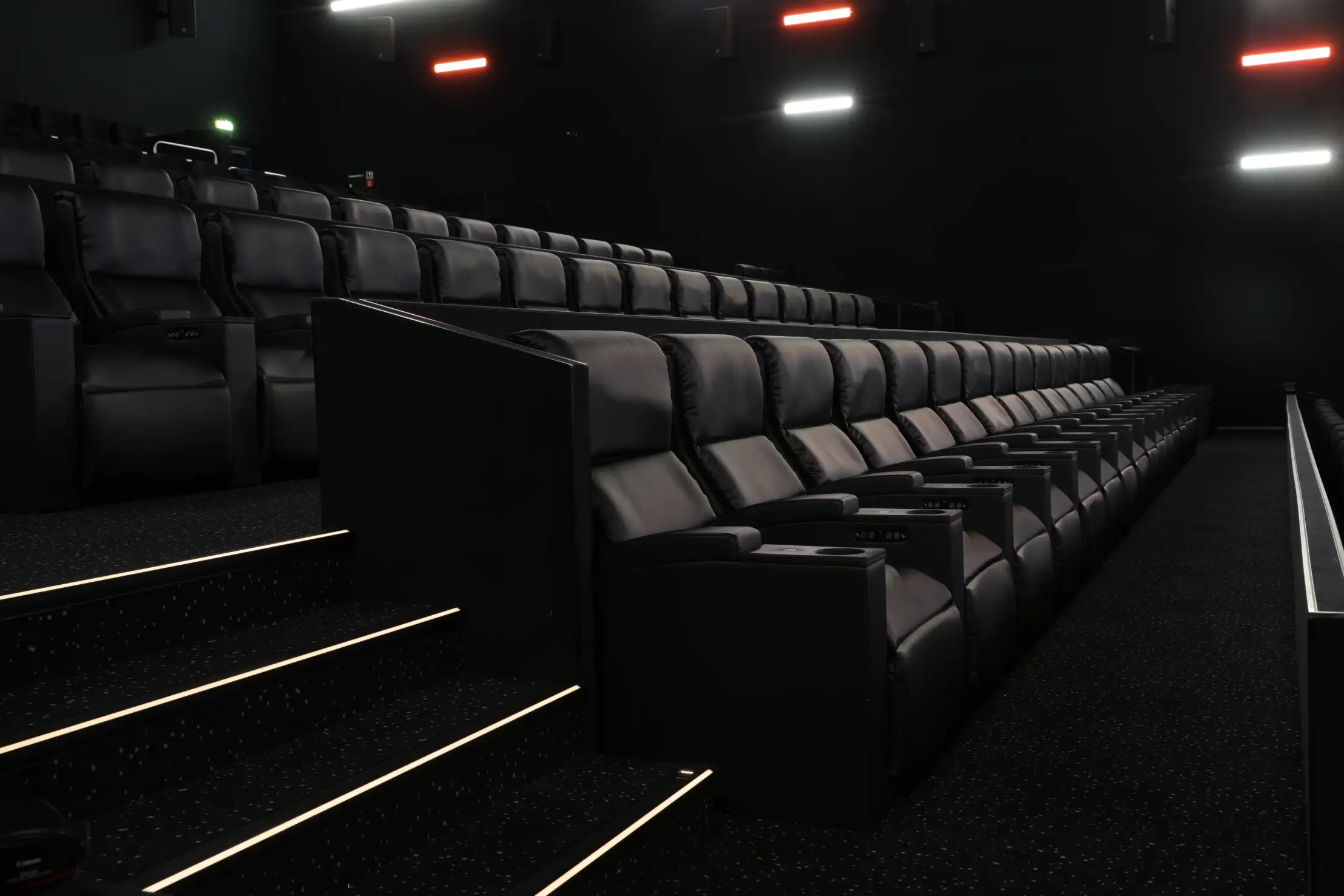
The Seat at the Center of the Cinema
When people think about cinema, they think about the screen, the sound, the story. Seating rarely comes to mind, yet it is the one element that remains constant from the moment the audience enters until the final scene fades out. The cinema seat is where the experience physically happens. Everything else is perceived through it.
Cinema seating does not compete with the film. It supports the conditions that allow the film to work. Its success is measured not by attention, but by the absence of distraction.
A Fixed Position in a Moving Story
Once seated, the viewer becomes physically anchored. Unlike other environments where movement is expected, cinema demands stillness. The seat must accept the body quickly and then hold it there, comfortably, for a sustained period of time.
If the seat requires adjustment, negotiation, or constant shifting, attention drifts away from the screen. A well designed cinema seat settles the body almost immediately. After that, it stays out of the way.
This quiet support is what allows the story on screen to remain uninterrupted.
Comfort That Disappears
Cinema comfort is not about softness alone. In fact, excessive softness often works against long term focus. What matters more is balance. The body needs support that maintains posture without forcing it.
Good cinema seating achieves comfort through shape and proportion rather than padding. The backrest guides the spine without pushing it. The seat depth allows the legs to rest naturally. Over time, the body forgets the seat is there.
That forgetting is intentional.
How Seating Shapes Collective Behavior
Cinema seating quietly regulates behavior. The spacing between seats, the angle of the backrest, and the alignment of rows all influence how people move, sit, and remain seated.
When seating is designed with care, movement during the film is reduced. People settle earlier, stand less often, and remain oriented toward the screen. The audience behaves as a group without being instructed to do so.
Seating creates order without enforcement.
The Spatial Role of the Seat
Inside a cinema, seating defines the room more than walls do. Rows establish rhythm. Aisles create flow. Repetition builds visual calm.
Before the lights dim, the seating layout already tells the audience what kind of space they are in. A well organized seating arrangement signals intention and control. A poorly planned one creates tension before the film even starts.
Cinema seats are architecture at human scale.
Silence Is Not Optional
Sound is fragile in a cinema. The smallest noise travels instantly. For this reason, cinema seating must operate in near silence.
There should be no sound when sitting down, no creaking during small movements, no vibration carried through the structure. Silence is not a luxury feature. It is a basic requirement.
When seating is quiet, sound design and dialogue remain intact. When it is not, immersion breaks.
Daily Use and Long Memory
Cinema seats are used repeatedly, often by hundreds of people each day. Their performance cannot depend on careful handling. They must remain stable under constant use.
Durability in cinema seating is not about looking strong. It is about staying aligned, tight, and predictable long after installation. Wear should appear gradually, evenly, and without affecting comfort or function.
A seat that feels the same in its thousandth use as it did in its first has done its job.
Visual Presence Without Expression
Cinema seats occupy most of the visible surface in a theatre, yet they should never dominate attention. Their role is to frame the experience, not compete with it.
This is why cinema seating often relies on repetition and restraint. Forms are consistent. Colors are controlled. Nothing pulls the eye away from the screen.
The seat supports atmosphere by refusing to become the focus.
Designed for Change Without Disruption
Cinema formats evolve. Film lengths vary. Audience expectations shift. Seating must remain relevant without constant redesign.
This adaptability comes from solid fundamentals. Proportion, posture support, spacing, and stability remain valuable even as details change. A well designed cinema seat does not need to chase trends to remain usable.
It stays because it works.
The Seat as the Unseen Constant
People leave the cinema remembering scenes, performances, and emotions. Rarely do they remember the seat itself. That absence of memory is not a failure of design, but its success.
The cinema seat holds the body still while the story moves. It absorbs weight, minimizes distraction, and maintains order in a shared space. It does all of this quietly, without asking to be noticed.
In the end, the most important role of cinema seating is not to be admired, but to remain reliable. When it does, the cinema remains what it is meant to be: a place where attention stays forward and the outside world fades away.
Created By : Simko Cinema Seating